
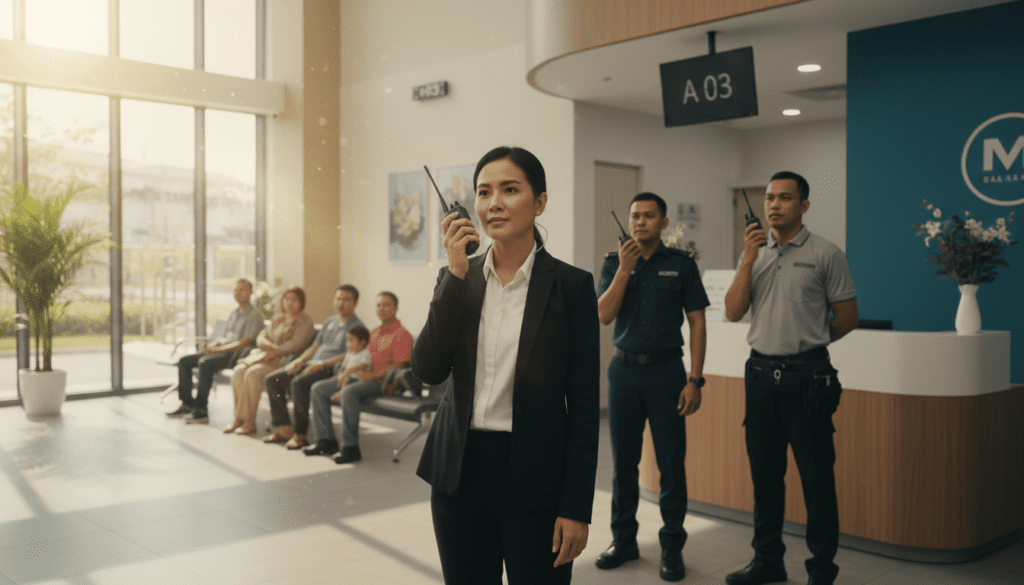
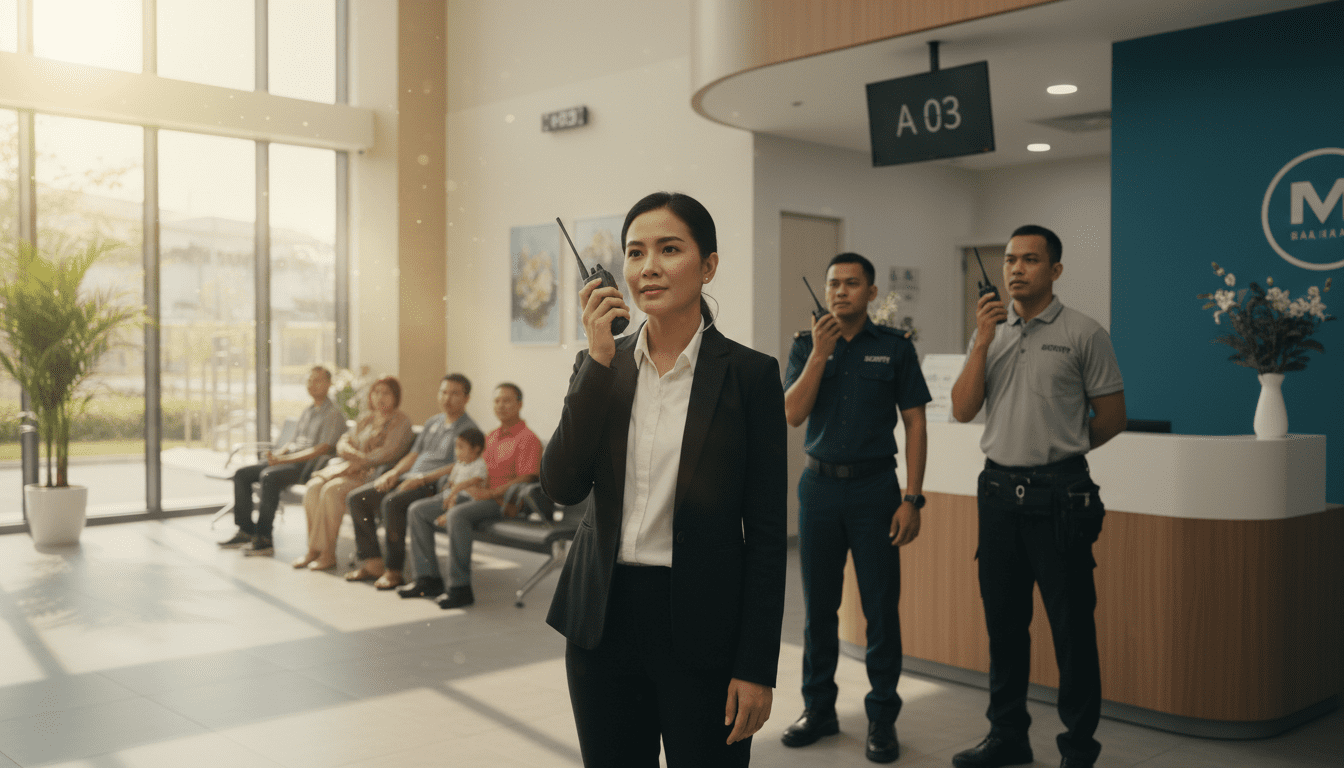
Walkie Talkie for Clinics Malaysia: Operations Guide
Use walkie talkies for Malaysian clinics and hospital support teams to coordinate security, porters, facilities, queues and emergency response.
Use radios for movement and escalation, not for patient-sensitive conversation.
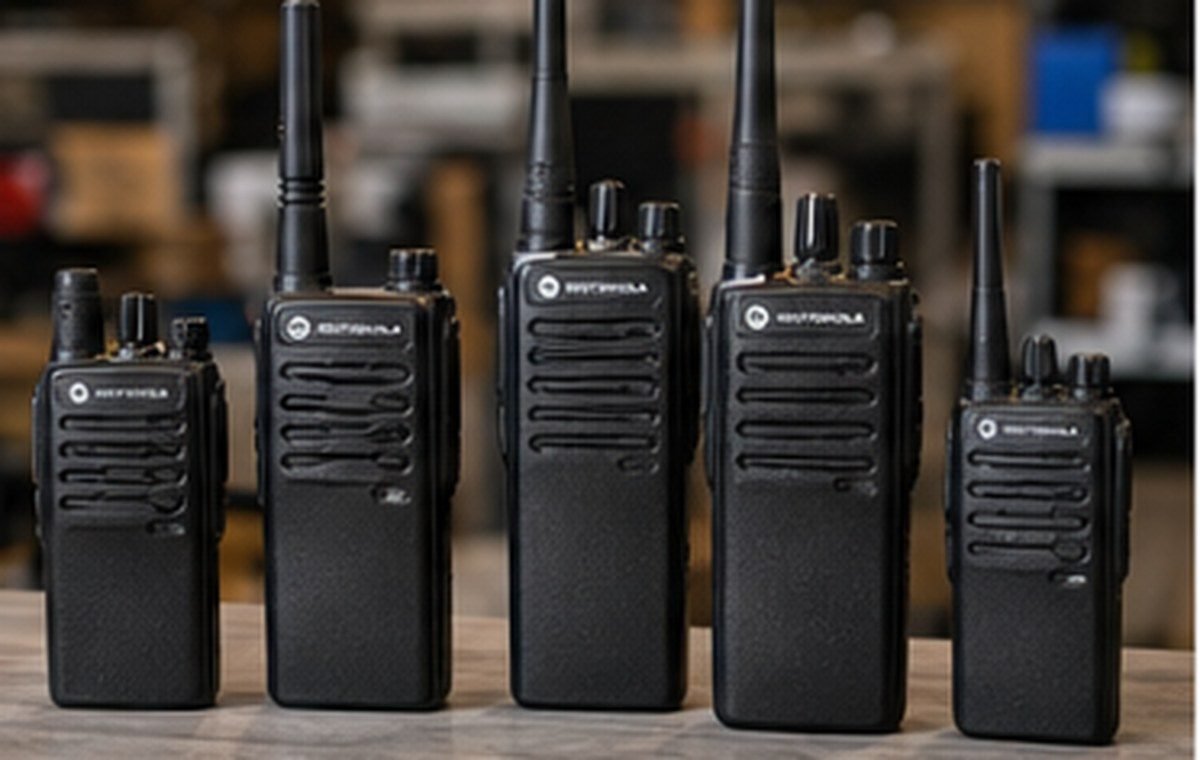
Octogen has supplied two-way radios to Malaysian sites since 2017. For clinics and hospital support areas, the radio plan should help reception, security, porters and facilities teams move quickly while keeping patient-sensitive details off open channels. A practical target is 6 support channels, 90-second acknowledgement from reception, 8-hour shift battery planning and 0 patient-sensitive details on open radio.
Response index
Measures whether the team can call, acknowledge and resolve routine issues before they become customer-facing problems.
Escalation flow
The best radio plan is short enough to use during a busy shift and strict enough to keep emergency traffic clear.
Channel map
Keep daily operations, support traffic and emergency escalation apart.
What should clinic walkie talkies cover?
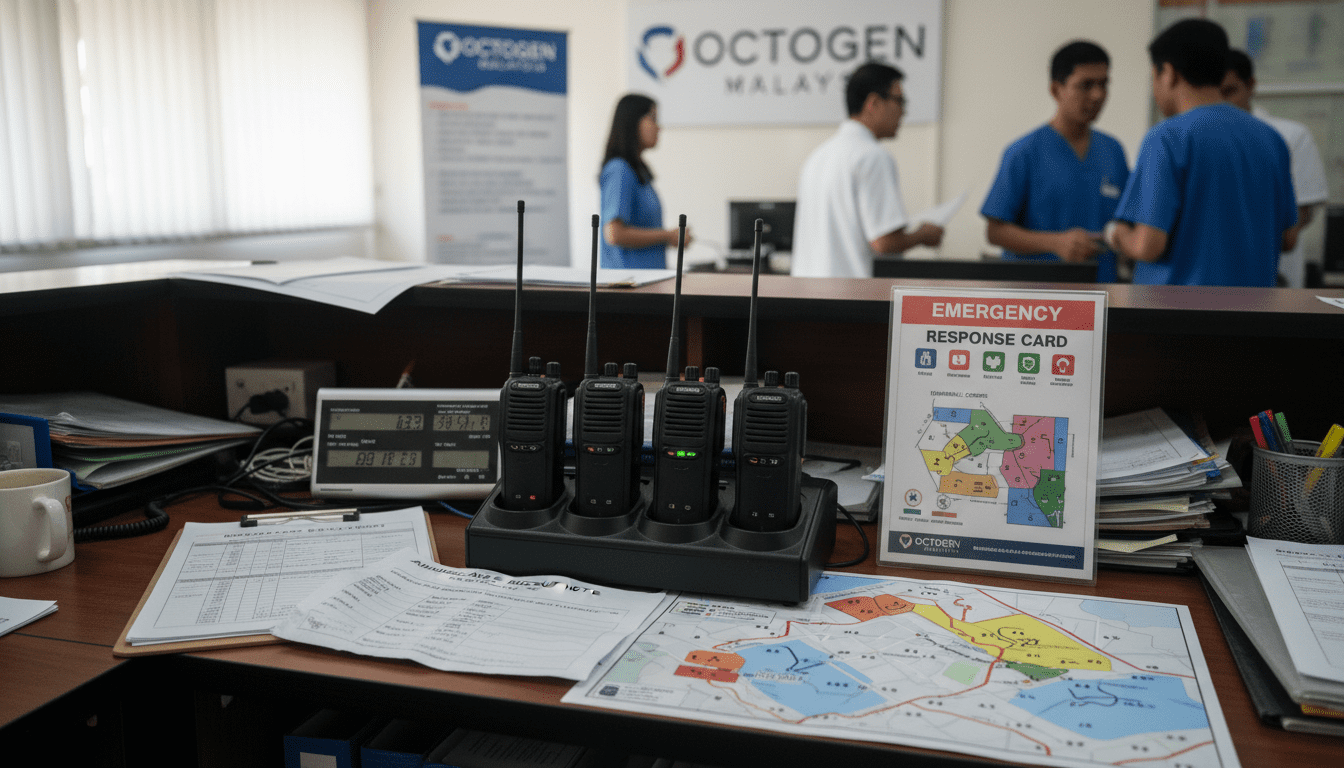
The goal is not to discuss medical details over radio. The goal is to move the right support person to the right place without making reception staff leave the counter or shout across the waiting area.
For Malaysian clinics, Octogen usually starts by mapping reception, waiting area, security post, facilities room, pharmacy counter, ambulance pickup and any back-office corridor where staff may need help.
A good setup lets the front desk call support in seconds while keeping the spoken message short: role, location and action needed. For many clinics, the planning target is a 90-second acknowledgement from security or facilities after reception calls for support.
- Use role-based call signs such as Reception, Security, Facilities and Queue.
- Ban names, IC details, medical details and diagnosis terms on open channels.
- Keep a spare unit and charger at reception or the support office.
- Test coverage from reception to waiting area, entrance, back corridor and pickup zone.
Reception and queue-control calls need short scripts
Queue pressure is often the first place radios help. Reception can call a porter, security guard, runner or facilities support without stopping registration, payment or appointment handling.
The script should avoid sensitive details. For example, say Reception to Queue Support, please attend waiting area three, rather than explaining personal circumstances over the radio.
If the clinic has multiple counters or floors, label areas clearly so temporary staff and part-time staff do not invent different names during a busy session. Keep 10 to 20 percent spare radios or batteries for peak sessions, evening clinics and staff handovers.
| Situation | Radio path | Privacy rule |
|---|---|---|
| Crowded waiting area | Reception to Queue Support | Use zone name, not patient name. |
| Visitor needs direction | Reception to Porter / Runner | Describe location only. |
| Aggressive visitor | Reception to Security | Move security without broadcasting details. |
| Counter equipment issue | Reception to Facilities | Keep the counter open while support moves. |
Security and porter coordination should stay separate from clinical details
Security teams may need to respond to entrance crowding, after-hours access, car park assistance or a difficult visitor. Porters or runners may need to move documents, equipment or people between reception and support areas.
Keep the radio language operational. Staff should say where help is needed and which role is assigned, then continue any sensitive conversation face to face or through the proper clinical channel.
For larger clinics and hospital support teams, a separate security or porter channel may be useful. For smaller clinics, one shared support channel can work if the rules are clear.
- Use short acknowledgement words so reception knows help is moving.
- Do not describe medical condition, identity or payment details over radio.
- Test whether radios work at the entrance, lift lobby, pickup bay and back corridor.
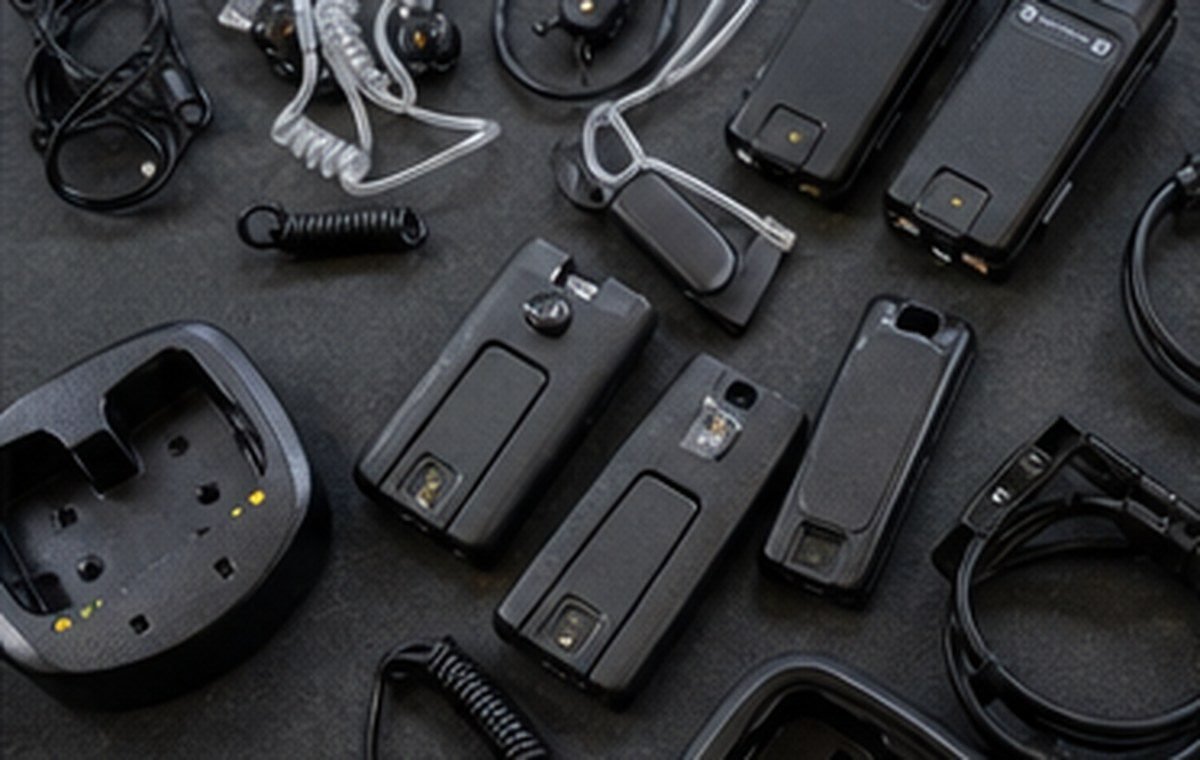
- Give security staff earpieces if public-facing radio audio would be disruptive.
Facilities calls should protect the patient experience
Air-conditioning issues, toilet problems, lighting failures, wet floors, access doors and power trips should have a clear radio path. Reception should not need to search for a technician while handling patients.
A facilities radio call should include the zone, the issue type and whether the area needs temporary control. Long explanations can wait until the support person arrives.
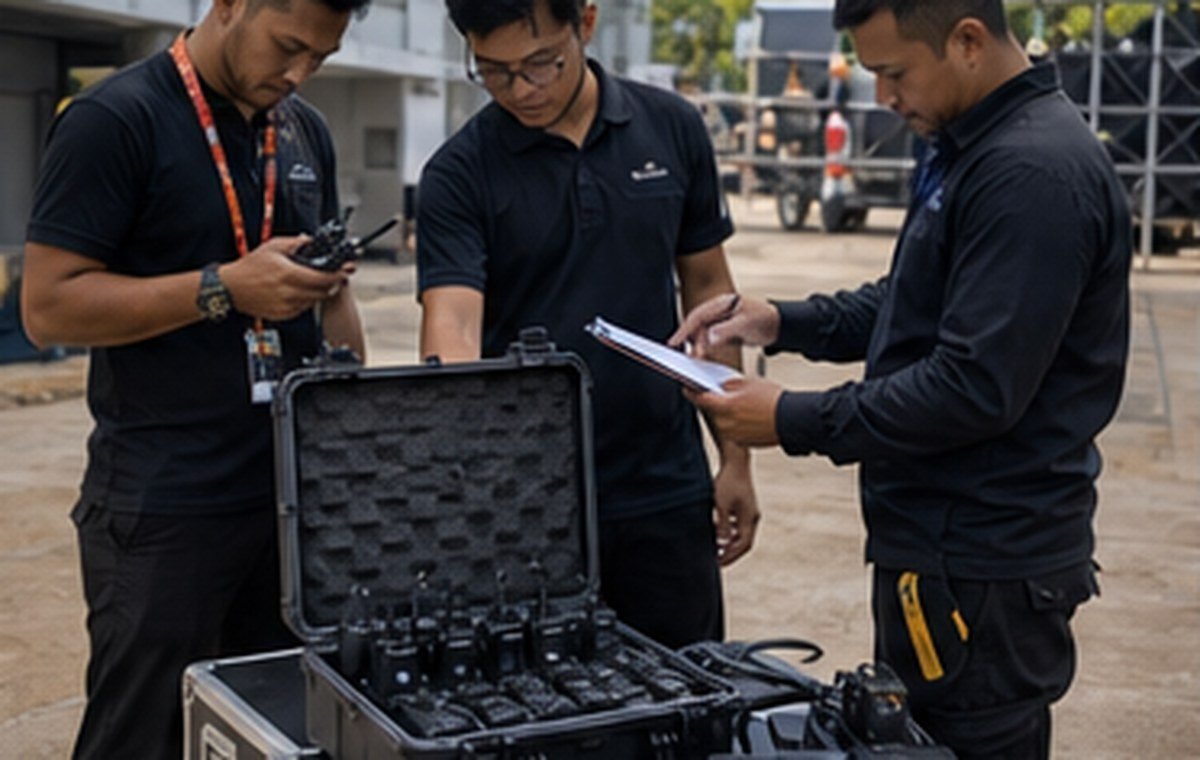
Octogen can help decide whether facilities staff need speaker microphones, belt clips, spare batteries or a separate charger point away from reception. For an 8-hour clinic shift, charger placement and spare battery rotation matter more than buying the highest radio count.
- Use area names that match signs or floor plans.
- Confirm arrival and close-out so reception knows the issue is handled.
- Keep a spare battery for long operating days and evening clinics.
- Review repeated calls after the first week to improve maintenance planning.
Emergency escalation needs a strict radio rule
Emergency radio traffic must be clear enough to move support fast but disciplined enough to avoid exposing patient-sensitive information. Decide the phrase, channel and escalation owner before rollout.
For example, staff can use Emergency Support to Reception, attend Zone A now, then handle sensitive details through the proper in-person or clinical process.
If a clinic shares a building, car park or ambulance pickup zone, test the radio path across those points. Emergency escalation fails if the radio works inside reception but not at the pickup area.
- Train staff on the exact escalation phrase.
- Keep emergency traffic separate from routine queue calls where possible.
- Confirm the pickup zone and security post are covered.
- Document who closes the incident after support arrives.
Real Deployment Notes
A printed clinic operations channel card helps relief staff use the same call signs and escalation words as the main team.
After one week, ask which calls were missed, which zones were weak and which channel had too much chatter. Adjust the channel plan before bad habits become normal.
Do not broadcast personal, medical, student, tenant or customer-sensitive details over an open channel. Use the radio to move the right person to the right place.
Common Customer Questions
Can clinics use walkie talkies without exposing patient information?
Yes, if the radio rules are strict. Use radios only for role, location and movement. Do not broadcast names, IC numbers, diagnoses, payment details or private patient information.
How many walkie talkies does a clinic need?
Start with reception, security, facilities, queue support, porters or runners, plus one spare unit. Larger clinics may need more units for each floor, pickup zone or after-hours team.
Should reception staff carry a radio?
Usually yes. A radio lets reception request support without leaving the counter, especially during peak queue hours, difficult visitor situations or facilities issues.
Do clinics need earpieces?
Earpieces are recommended for public-facing roles where speaker audio may disturb patients or reveal operational chatter. Security and reception support often benefit most.
Will radios work in clinic back corridors and lift lobbies?
They must be tested. Walls, lift cores, parking levels and back-of-house corridors can reduce coverage. Octogen should walk-test the actual clinic layout before final rollout.
Can hospital support teams use the same setup?
Yes for non-clinical support teams such as security, facilities, porters, parking and queue management. Clinical communication rules and privacy requirements should remain separate.
Is rental or purchase better for clinic radios?
Purchase usually fits permanent clinic operations, while rental is useful for temporary screening areas, vaccination drives, renovation periods or a pilot before a full rollout.
What should we send Octogen before asking for a clinic radio quote?
Send the floor layout, staff roles, operating hours, pickup zone, weak coverage areas, privacy rules, number of counters and whether you need earpieces, chargers or spare batteries.
Ask Octogen About Your Site Coverage
Send Octogen your site layout, user count, shift pattern and queue control concerns. The team can recommend a practical radio count, channel plan, accessories and coverage test for Malaysian operations.